Demand Intelligence
Demand intelligence explains energy consumption behavior across customers, sites, regions and time. It helps improve efficiency, planning, demand response and grid investment decisions by identifying why demand changes and where flexibility exists.
What It Is
Demand intelligence goes beyond measuring load. It interprets the drivers behind consumption: customer behavior, weather sensitivity, occupancy, industrial activity, tariff response, EV charging, distributed generation and technology adoption.
It sits between load analytics and action. Load analytics shows what demand looks like; demand intelligence helps explain why it behaves that way and how it may respond to incentives, automation or planning decisions.
Key Pain Points
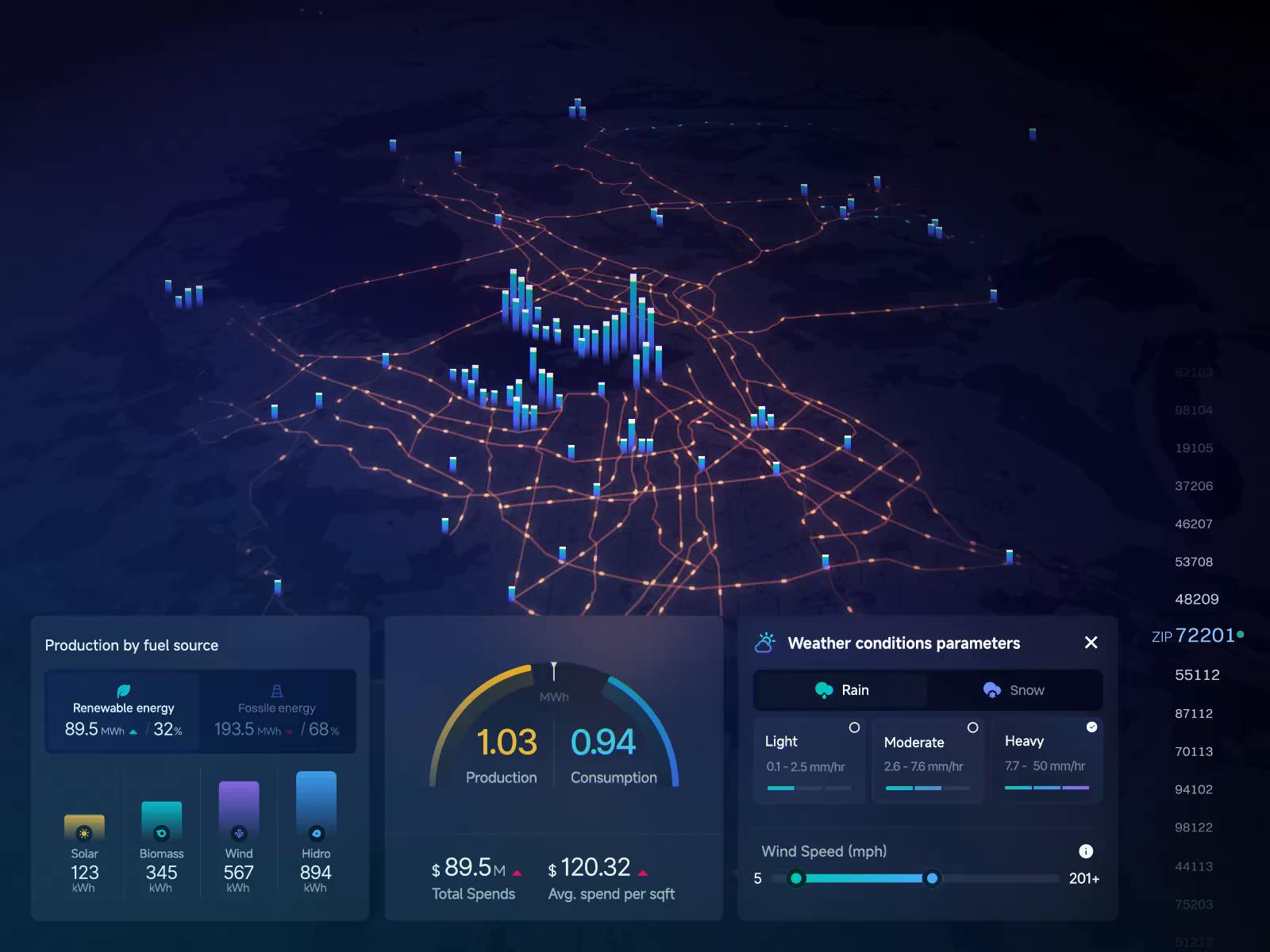
Energy demand is becoming harder to predict because electrification, distributed assets, weather extremes and customer behavior are changing load patterns.
Behavior & Demand Drivers
Demand intelligence combines consumption data with context to understand why demand changes and which actions may influence it.
| Driver | What It Explains | Planning Relevance |
|---|---|---|
| Weather sensitivity | Heating, cooling and seasonal demand changes | Peak planning, resilience, forecast adjustment |
| Customer behavior | Usage routines, occupancy, appliance patterns and response to signals | Efficiency programs, demand response targeting |
| Electrification | EV charging, heat pumps and electric industrial processes | Feeder loading, capacity planning, tariff design |
| Distributed energy | Behind-the-meter solar, batteries and controllable loads | Net demand, flexibility, local balancing |
Intelligence Workflow
A strong demand intelligence workflow turns consumption data into explainable segments, flexibility estimates and planning recommendations.
Methods
Demand intelligence uses analytics and AI to connect demand patterns with behavior, context and decision-making.
Efficiency & Planning Impact
Demand intelligence improves planning because it links consumption behavior to practical interventions: efficiency programs, tariffs, automation and infrastructure investment.
| Use Case | Demand Intelligence Contribution |
|---|---|
| Energy efficiency | Identifies segments with high savings potential and relevant recommendation types. |
| Demand response | Targets flexible customers and estimates likely response before program rollout. |
| Grid planning | Improves demand growth assumptions for feeders, substations and local capacity needs. |
| Tariff design | Supports pricing structures based on actual behavior and system constraints. |
Key Performance Metrics
Demand intelligence should be measured by how well it explains behavior and improves planning outcomes.
Limitations & Practical Considerations
Demand intelligence depends on high-quality consumption data and responsible data governance. Customer-level analysis may involve privacy, consent and aggregation requirements.
Behavioral models can also change over time as tariffs, technologies, weather patterns and customer habits evolve. Results should be refreshed regularly and validated against observed program outcomes.
Related Deep Dives
Demand intelligence connects load analytics with smart charging, market trends and grid planning.